Ta Prohm Temple
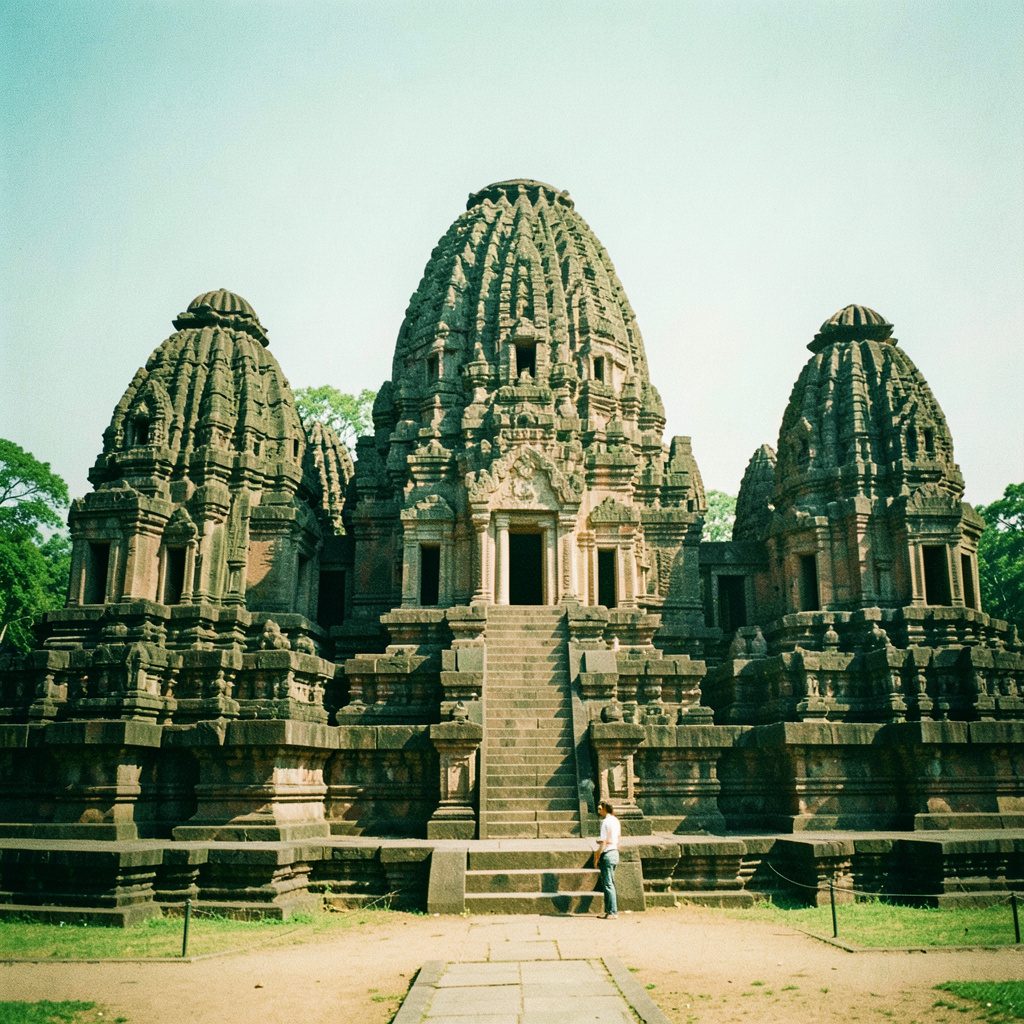
Originally known as Rajavihara, this atmospheric temple was built in the Bayon style during the late 12th and early 13th centuries. It stands as one of the most evocative monuments of the Angkor archaeological site.

A temple embraced by the jungle
Ta Prohm is located approximately one kilometer east of Angkor Thom, on the southern edge of the East Baray. Unlike many other Angkorian temples that have been extensively restored, Ta Prohm was deliberately left in much of its natural state — with towering silk-cotton and strangler fig trees entwined through the stonework.
Built largely in the late 12th and early 13th centuries under King Jayavarman VII, the temple was originally called Rajavihara. Its design follows the Bayon style, characterized by face towers, intricate bas-reliefs, and a layout that reflects both Hindu and Buddhist influences.
The temple complex forms part of the greater Angkor archaeological site, a UNESCO World Heritage area that draws visitors and photographers from across the globe. The interplay of crumbling sandstone, gnarled roots, and shifting light makes Ta Prohm a compelling subject for architectural and nature photography alike.
The Ta Prohm temple complex offers one of the most extraordinary photographic experiences in the Angkor region, where ancient stone corridors and towering prasat structures merge with the relentless growth of the surrounding jungle. Massive silk-cotton and strangler fig trees have claimed the walls and galleries, their roots cascading over carved devatas and lintels in a dramatic embrace. For photographers drawn to architectural and landscape imagery, this site presents a rare dialogue between human craftsmanship and nature's reclamation. The interplay of dappled light filtering through dense canopy across moss-covered sandstone creates ever-shifting compositions that reward patience and a keen eye for texture and contrast.
Beyond its visual drama, Ta Prohm carries a deep historical resonance as a temple-monastery originally known as Rajavihara, reflecting the spiritual and intellectual ambitions of the Khmer Empire. The complex layout, with its interconnected courtyards, long galleries, and sanctuary towers, offers endless opportunities for exploring geometric patterns and layered perspectives. The muted grays of the stone, punctuated by patches of green lichen and the warm tones of laterite, provide a natural palette that complements the minimalist aesthetic favored in contemporary temple photography. Visiting this site connects one to a broader collection of monuments across Cambodia, India, and Indonesia that continue to inspire the global community of temple photography enthusiasts.
Photography from Ta Prohm
A selection of images capturing the temple's distinctive atmosphere and architectural detail.

Ta Prohm Temple 019
Roots and reliefs intertwine across the inner gallery walls.
Ta Prohm Temple 018
A quiet passageway deep within the temple's inner enclosure.

Ta Prohm Temple 017
The iconic silhouette of nature reclaiming sacred stone.

Ta Prohm Temple 016
Morning light catches the texture of centuries-old masonry.

Ta Prohm Temple 015
A lone gateway framed by the encroaching forest.

Ta Prohm Temple 014
Delicate carvings preserved beneath the canopy.
Explore more of Cambodia
Continue your journey through the temples of the Angkor complex and beyond.